
Frog Toy Orchestra

Ancient Future: Frog Toy Orchestra
A Do-It-Yourself Symphony From the Swamp

"Join Matthew Montfort and members of Ancient Future in a symphony that takes its inspiration from the swamp pit, rather than the orchestra pit. Using toy frogs and simple percussion instruments designed to imitate the sounds in the environment, we'll come together to create a spontaneous piece of live music flavored with the euphonious sounds of Bali and the classic gamelan orchestra."
"Ancient Future's second album, Natural Rhythms, includes improvisations with actual Balinese rice paddy frogs. They will bring the same magic to orchestrate members of the public. Whether your toy requires you to shake, rattle, roll or squeeze, the do-it-yourself orchestra will incorporate the natural rhythm of frogs and man-made gamelan rhythms that were inspired by the frogs of Bali. Frog toys will be provided."
– Exploratorium Press Release
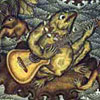
Developed in collaboration with the Exploratorium in San Francisco for their Frogs exhibit, this program allows everyone in the family to have a great time and learn something about frog calls and Balinese gamelan rhythms related to them. Balinese music uses interlocking rhythms, divided in such a way that musicians play alternate notes to form the rhythm. These interlocking parts, known as kotèkan, are similar to the interplay among Balinese rice paddy frogs. In fact, there is even a Balinese ensemble that imitates the frogs, and all over the island one can find paintings of frogs performing on Balinese musical instruments. A great way to learn about rhythm and nature while having fun. For all ages.
Venues: Colleges, Public Schools, Universities, Music Camps
Traditions: World Music,World Fusion, Balinese Gamelan, Interspecies Music
Moods: Atmospheric, Earthy, Exciting, Exotic, Intimate, Mysterious, Playful, Spontaneous, Thrilling, Uplifting
Hashtags: #WorldMusic, #InterspeciesMusic, #BalineseGamelan,#MusicEducation, #Frogs
 Frog Music
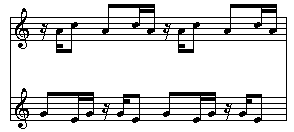
Kotèkan (traditional) MIDI. >play. This interlocking rhythm from Balinese gamelan music, similar to the calls of Balinese rice paddy frogs, is taught to the audience as part of their participation in the Frog Toy Orchestra. The two parts of a kotèkan, which are thought of as male and female, are known as nyangsih and polos. The main accents of the nyangsih part are usually on the offbeat, while the main accents of the polos part are usually on the beat. These interlocking rhythms have a unique way of bringing people together in cooperation towards a common goal. This rhythm is also a beginning level kotèkan from the book Ancient Traditions–Future Possibilities, Chapter 2, page 49.
Valley of the Moon (Matthew Montfort. 2:37). >YTmusic. This dialog between zither and Pacific tree frogs was recorded at a pond in Sonoma County, California, with no overdubs in 1980. Available on the Natural Rhythms CD, it is the first known recorded music made by a human and a pond of frogs. In a portion of the Frog Toy Orchestra presentation, the audience is taught to mimic these frog calls.
Frog Orient Chance. (Matthew Montfort. 2:29). >YTmusic. The Frog Toy Orchestra presentation ends with the audience performing the basic percussion and frog call parts for this song while the members of Ancient Future play along. In this recording from Natural Rhythms, the basic tracks of frogs and percussion were recorded live in the rice paddies of Bali. Guitars and gangsas were overdubbed.
Contact Info
Tel: 415-459-1892. info@ancient-future.com
Booking: Additional booking information, or use the contact information above.
Catalog: Listen to the CDs and use the secure online shopping cart system to purchase music.
Concerts: Current list of shows online.
Guest Book: Subscribe to the Ancient Future e-mail newsletter. Contests for prizes such as concert tickets each issue.